The History of Music Videos

Music videos discussed in this piece of research:
I think it is important that I looked at the history of music videos as it has given me a backbone of knowledge regarding how music videos have changed over time as well as some of the current conventions of music videos. This is vital information that will be useful to me during the planning and research stages of me working towards my own music video.
Music videos discussed in this piece of research:
Music Genre Comparison:
A comparison of music genres is something I have found useful as it has allowed me to begin deciding what genre of music I would like to use for my own final products. It has also indicated to me the importance of each genres individual conventions. This has shown me that during the planning process of my music video I must pay close attention to the conventions of my genre and be certain in them for when I create my products. I made the mood board seen below to try and further my knowledge of music genres in music videos and illustrate to me the clear differences in genre.
Mood Board:

The types of music videos:
This piece of work has helped me define each genre type clearly which will be helpful to me when creating my own final piece. This is because it has ensured that I have a full understanding of the conventions within each music video type.
Lip Sync Trial:
Theories:
There are many theories and theorists that can be used in relation to music videos and allow us to decipher how and why music videos are created in the ways that they are. They also try to understand the affect music videos have on audiences. I believe it is important to be very aware of these theories before making my music video and subsequent products. They will help me ensure that my music video is professional, conventional and does not unintentionally resemble a short film, which some music videos can be if the theories are not examined and considered during the planning and creation process.Andrew Goodwin's 'Dancing in the Distraction Factory':
Goodwin's theory is one of the many models of identifying the conventions of music videos. His theory contains many different convention which allows it to be applied to most music videos. It is more of a modern theory which further allows it to be easily applied.
Some of these conventions, which videos can contain one or more, are;
- Music videos demonstrate certain genre characteristics as well as iconography being present.
- Music videos show a relationship between the lyrics of the song and the visuals. Often the visuals will emphasize, illustrate or even contradict the lyrics.
- As well as a relationship between lyrics and visuals, Goodwin argues that a common convention of music videos is that their is often a relationship between the music and the visuals. This can also illustrate, amplify or contradict the music.
- Music videos tend to focus on close up and extreme close up shots, usually because the record label demands it.
- Furthermore, Goodwin also argues that voyeurism plays a major part in music videos, particularly regarded females.
- Finally, the convention of intertextual references (mostly film, television and pop culture) to other media may be present in music videos.
To help develop understanding of his theory even further, i decided to analyse a music video using this theory. The music video I chose was Eminem's 'Real Slim Shady' as it is modern and therefore Goodwin's video will be easily applied to it.
This music video appears to be conventional according to Goodwin's 'Dancing in the Distraction factory'. This is because of how the visual elements to the music video put emphasis on the song's lyrics. Evidence of this is when he raps 'And started whooping her ass worse than before They were divorced, throwing her over furniture', as the visuals shown in the music video strongly correlates to the lyrics as a man and woman having an argument and the woman being 'thrown over furniture' is shown. This puts a stronger emphasis on the deeper lyrical meaning of the song words.
Throughout the entirety of the music video, the visuals on screen match and amplify Eminem's lyrics, which thus make it a conventional music video according to Goodwin's theory.
Furthermore, the video also appears to be conventional as the camera angles and movements used constantly ensure the artist, Eminem, is the focus of every frame he is seen in. They also do this with the mise en scene as his costume is significantly brighter and more obtrusive than those around him.
As well as this, intertextual references are made by Eminem as he references 'Dr Dre's dead, he's locked in my basement'. Here he is referencing popular hip hop artist Dre. What makes this video even more conventional is the fact that the visuals on screen when these lyrics appear emphasize and visualize the lyrics as a picture of Dr Dre on a milk bottle is shown.
For the duration of the music video Eminem pays close reference to other celebrities and pop stars such as 'Britney Spears', 'Christina Aguilera', 'Carson Daley' and 'Fred Durst' who would have all been prominent in pop culture at the time.
Additionally, later on in the song Eminem references both the 'Discovery Channel' and the song 'The Bad Touch' by The Bloodhound Gang. This further illustrates the conventionality of this music video.
This shows how intertextual references are a key occurrence in this music video and Eminem's song which allows it to fit the conventions of Goodwin's music video.
Survey: 29th June
I decided to create a survey in order to gather information about what different genders, age groups and music tasks preferred in a music video. This will help me develop my understanding of audience's Uses and Gratifications (Blumler and Katz) and what they want to see in a music video. As well as this, it will also allow me to create a music video that suits these requirements.
Planning for a mock music video:
In preparation for creating our own music video, me and a few peers decided it would be a good idea to try and replicate an already existing music video. We decided to plan, storyboard and execute this product in a way that we would if it was the real thing. The reason for this was that we thought it would put us in the right mindset for planning our own final products as well as give us experience in what it is like to film a music video and how it is done. Because music videos are so different to our previous filming experiences, we thought it would be a good idea to experiment so we fully understand the process instead of jumping into our final product with no idea about what we are doing. As well as this, it was good to see how I could apply the theories I have researched to the actual creation process. We chose to recreate the music video for 'When I was a youngster' by Rizzle Kicks because I wanted to see how a hip-pop music video is made and examine an example of one.
Filming schedulue:
Friday 1st July
|
Planning
|
Sunday 3rd July
|
Getting props together:
-
cake/ candles from Lidl or Waitrose
-
Making space man suit out of cardboard and
tinfoil
-
X-box game console/controllers are already at
the house we are filming in but ensure that we have them all ready and set up
for use
-
make sure the camera we are using (Ed’s) is
charged.
|
Monday Lunchtime 4th July
|
Filming the spaceman/builders scene in the media suite
-
Need mugs for a scene
-
We’ll use friends to sit at the computers and
act like they are doing work
-
Handheld camera that follows them round as
they walk through the ‘office environment’
|
Tuesday after school 5th July
|
Filming the rest of the scenes
-
Shots of nerf gun fights in the park
-
Lip syncing and dancing in the park – kids there
and dancing with the older boys if they are available
-
Back to Aaron’s house to film the cake scene with
the candles
-
Film the scene when the two older boys are in the
bedroom playing X-box/video games
-
Film the close up shot playing with the teddy
bear
|
Wednesday 6th July
|
First editing of draft version
-
Using Ed’s editing software
-
Just compiling the clips together and adding the
sound track on top
|
Thursday 7th July
|
Group critique
|
Friday periods 1&2 8th July
|
Final editing session
-
Using group critique to edit video further on
serif movie plus and make the improvements that are necessary
-
Publish the video
|
Ideas brainstorm after watching the video
Props and locations:
Storyboard:
Our recreation of Rizzle Kick's 'When I was a youngster' music video:
Evaluation of our products:
Overall I am pleased with the way this music video experiment turned out. We managed to get all the shots we needed and have a few extra options to choose from. It was helpful to experiment with making a more refined product rather a simple experiment, like we did with the lip sync experiment. The use-fullness of filming a longer experiment I believe will definitely show when it comes to producing my final media text. It was interesting and helpful to replicate an already existing music video as it allowed for us to focus more on the conventions of music videos which means that when it comes to creating. Introducing creative ideas and interpretations is something I want to experiment more with before I produce my final product. Also, I think it was good that we did this mini-project in a group as it allowed us to get a feel of working on a music video with help from others before we create our own individually. In this video we used a new, more professional tripod our media department got this year so it was good to experiment with that and get a feel for how it is used. This will come in handy when I eventually come to film my final video as I will be more experienced with the equiptment. As well as this, I think this mini-project was useful because although I have used the digital cameras before last year, it was interesting to use it for a different format. This will also help me when it comes to creating my final music video as I will have more of a feel for how to use the equiptment for a different style of filming.Things I now know to improve:
- Making sure the camera battery is fully charged before I go out to film. This is because we had to wait a few hours to charge the camera before we could go out to film and several times we had forgotten to turn the switch on or fully plug in the charger which meant our time was much more restricted.
- Use more interesting locations and actors. Although this was only an experiment next time around I would like to branch out from using the local area as filming locations and really think about where I'm filming as so far I've only considered convenience for us and whatever is quickest and easiest to get to.
- Ensure time management and planning is the best it can be as this will always effect the outcome of the final video and will also determine how easy editing will be.
What I learnt from this experiment:

Music Video Directors Analysis:
I think it was important that I analysed some currently existing Music Video directors as it has indicated to me that a director's own personal style of music video is in a way a genre of its own because they are so unique. It has suggested to me that straying from typically conventions isn't always a bad thing if it fits the desired effect of the video and the director's personal style. It has also helped me begin to form an idea of what genre I want to focus on because I really enjoyed Hiro Murai's work for hip-hop songs and his personal style.
Individual artist music video comparison - early to recent:
(unedited version of the podcast)
Music videos I analysed in this discussion:
Magazine Advert Analysis:
Adverts for albums in a magazine have a variety of different purposes. The main reasons for this form of music advertising is to promote the artist and persuade potential audiences to buy the album and music. As well as targeting already existing fans and potential buyers the adverts aim to appeal to a wider audience and therefore attract more sales for the artist. The adverts help build hype and buzz, especially if they have posted adverts in other media outlets, this increases the chances of audiences buying the music as they are excited to hear it after all the buildup. Adverts achieve this by using a whole page for the advert which draws audience's attention and also make the advert's visuals appealing and engrossing.
Magazine adverts for albums have a few typical conventions that apply to, if not all, the majority of artists. These are:
- Name of the artists, to ensure the audience know who's album the advert is promoting
- Name of Album, so they can search for it more directly
- Main image, used to capture the audience's attention and draw them in to the advert. This is usually iconographic of the artist themselves or something assosiated with the artist/band
- Logo, used because they are easily recognisable for an audience
- Release date, so they know when to look for the album and also create anticipation
- 'includes the single', this is used so that if the audience has heard this single and liked it they will want to buy the rest of the album
- Record Label logo, to inform the audience (and therefore fulfil one of Blumler and Katz Uses and Gratifications)
- Artist and Label websites, so the audience know where to look for the album and music
- Social Media links, so the audience know where to find out more and potential talk about the album and advert online, thus creating a wider potential audience
- QR Code, used as a different method of getting more information and the album itself, creates more windows of exhibition for the audience to use
- Reviews, used so the audience can be more heavily persuaded to purchase the album.
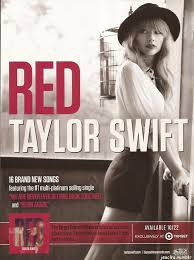


These are some examples of typically conventional album magazine advert. They all include the name of the album, the band name, when the album is being released or out, examples of singles from the album and images that are iconographical to the artists.
Magazine adverts for albums have a few typical conventions that apply to, if not all, the majority of artists. These are:
These are some examples of typically conventional album magazine advert. They all include the name of the album, the band name, when the album is being released or out, examples of singles from the album and images that are iconographical to the artists.
Individual analysis of magazine cover:

This magazine advert for Jessie J's album 'Who You Are' seems on the forefront to be conventional of this form of advertising. The main features of this advert is the name of the artist and an image of her face. The colour scheme used of black gold is very powerful and bold, which draws the audiences attention to the advert which is arguably the most important part of the advert. Direct eye contact with the camera is used by Jessie J, the main feature of the advert and the artist herself, is incredibly empowering and gives the impression that she is a strong woman and her music will reflect this attitude of female empowerment. The eye contact may also suggest that her music will be personal because it creates the impression that she is communicating directly with the audience. The dark, modest clothes and stance of Jessie J isn't sexualised at all, which goes again the typical perspective of women in the industry as Laura Mulvey describes as the 'male gaze' theory. The dark clothes and colour scheme, which is emphasised by the high key lighting, also suggest that the artist is unconventional and edgy as this isn't a colour regularly used by pop artist. It leaves the audience confused as to what genre of music Jessie J produces which thus intrigues them into buying the album.
Furthermore, the overall black colour tones used on the lower half of the advert ensure that the writing stands out and therefore
The advert feature the phrase 'Includes the #1 international smash 'Price Tag'' which is not only conventional but he use of the language 'international smash' is incredibly persuasive and sure to convince not only existing fans but potential fans to buy the album. This is because they will be familiar with one of the songs but also are also given an insight into what the rest of the album will sound like. This helps emphasise the already existing success of the artist which aims to convince audiences that the album will be just as successful.
Something that isn't conventional about this album advert is that it doesn't include a release date. This doesn't help as the audience will may not remember to buy the album if they don't know when the album is coming out. However, the lack of this typical convention may suggest that the artist being advertised is famous and therefore it could be considered common knowledge of when the artist's album is being released. The lack of information may also assist in embedding enigma codes (Barthes) which captures the audience's interest and encourages them to want to find out more. Enigma codes are something we don't automatically associate with magazine adverts, however, in this case it is easy to see how effective they could be. Another reason for this may be because the album was already out at the time of the magazine release, therefore it was deemed unnecessary by the producers to.
According Young and Rubicam theory of 'Cross Cultural Consumer Characterisation' I would place the target audience of this advert and Jessie J's music to be mainstreamers, simply because she is a pop artist and the advert mentions a big name in the pop music industry 'B.O.B'. Mainstreamers are the audience group who are categorised as engaging with pop music more so than any other group of audience, which is why I believe this advert is targetting them. However, I do also believe that the advert would appeal to the audience group known as 'Reformers'. This is because the advert is unique for an artist in the pop music genre with its heavy emphasis on the colour black and the uniqueness of Jessie J's look which suggests that she is a different variety of pop artist and that audiences will have something to learn from her, which the Reformer group typically like.


This magazine advert for Jessie J's album 'Who You Are' seems on the forefront to be conventional of this form of advertising. The main features of this advert is the name of the artist and an image of her face. The colour scheme used of black gold is very powerful and bold, which draws the audiences attention to the advert which is arguably the most important part of the advert. Direct eye contact with the camera is used by Jessie J, the main feature of the advert and the artist herself, is incredibly empowering and gives the impression that she is a strong woman and her music will reflect this attitude of female empowerment. The eye contact may also suggest that her music will be personal because it creates the impression that she is communicating directly with the audience. The dark, modest clothes and stance of Jessie J isn't sexualised at all, which goes again the typical perspective of women in the industry as Laura Mulvey describes as the 'male gaze' theory. The dark clothes and colour scheme, which is emphasised by the high key lighting, also suggest that the artist is unconventional and edgy as this isn't a colour regularly used by pop artist. It leaves the audience confused as to what genre of music Jessie J produces which thus intrigues them into buying the album.
Furthermore, the overall black colour tones used on the lower half of the advert ensure that the writing stands out and therefore
Furthermore, the overall black colour tones used on the lower half of the advert ensure that the writing stands out and therefore
The advert feature the phrase 'Includes the #1 international smash 'Price Tag'' which is not only conventional but he use of the language 'international smash' is incredibly persuasive and sure to convince not only existing fans but potential fans to buy the album. This is because they will be familiar with one of the songs but also are also given an insight into what the rest of the album will sound like. This helps emphasise the already existing success of the artist which aims to convince audiences that the album will be just as successful.
Something that isn't conventional about this album advert is that it doesn't include a release date. This doesn't help as the audience will may not remember to buy the album if they don't know when the album is coming out. However, the lack of this typical convention may suggest that the artist being advertised is famous and therefore it could be considered common knowledge of when the artist's album is being released. The lack of information may also assist in embedding enigma codes (Barthes) which captures the audience's interest and encourages them to want to find out more. Enigma codes are something we don't automatically associate with magazine adverts, however, in this case it is easy to see how effective they could be. Another reason for this may be because the album was already out at the time of the magazine release, therefore it was deemed unnecessary by the producers to.
According Young and Rubicam theory of 'Cross Cultural Consumer Characterisation' I would place the target audience of this advert and Jessie J's music to be mainstreamers, simply because she is a pop artist and the advert mentions a big name in the pop music industry 'B.O.B'. Mainstreamers are the audience group who are categorised as engaging with pop music more so than any other group of audience, which is why I believe this advert is targetting them. However, I do also believe that the advert would appeal to the audience group known as 'Reformers'. This is because the advert is unique for an artist in the pop music genre with its heavy emphasis on the colour black and the uniqueness of Jessie J's look which suggests that she is a different variety of pop artist and that audiences will have something to learn from her, which the Reformer group typically like.
According Young and Rubicam theory of 'Cross Cultural Consumer Characterisation' I would place the target audience of this advert and Jessie J's music to be mainstreamers, simply because she is a pop artist and the advert mentions a big name in the pop music industry 'B.O.B'. Mainstreamers are the audience group who are categorised as engaging with pop music more so than any other group of audience, which is why I believe this advert is targetting them. However, I do also believe that the advert would appeal to the audience group known as 'Reformers'. This is because the advert is unique for an artist in the pop music genre with its heavy emphasis on the colour black and the uniqueness of Jessie J's look which suggests that she is a different variety of pop artist and that audiences will have something to learn from her, which the Reformer group typically like.
Digipack analysis:
Digipacks are the images and information we see on the front and back, and on the inside, of a CD. They can either tell us a lot about an artist or tell us very little and they differ drastically between each genre of music and individual artist, which allows a lot of room for creativity.


To me, its seems that in order for a digipack to be successful and appealing to a wide variety of audiences it has to be different and stand out from the crowd. For example, the aesthetic of Katy Perry's digipack is completely different to Frank Ocean's, yet they are both successful because they are individual and unique to the artist.
My analysis has given me mixed views on how to approach making a digipack myself because they are all so different; there are no strict conventions that have to be adhered to at all times. I think it is overall incredibly important for my digipack to reflect the style of the artist I choose, which all of the ones I have seen have similarly done. However I think that it creates a more effective digipack if it leaves some things to the audiences's imagination.
I think a more successful digipack is one that doesn't give much away about an artist as it creates enigma codes (Barthes) and entices the audience to actually listen to the album and find out more. This also helps satisfies one of the audience uses and gratifications (Blumler and Katz), which is gaining knowledge and information, so the audience are given complex satisfaction from the music and are not simply being entertained.
A trend I have seen in the digipacks I have analysed is that each one has a significant colour scheme that is bright, vivid and catches the audience's attention. This is something I will try to include in my own digipack when it comes to creating one as it is much more prosperous in enticing the audience.
This analysis has helped me realise that staying away from typical conventions, such as featuring images of the artist on the front of the digipack, can sometimes be more successful than sticking to stereotypical conventions because they catch the audience's attention more. As long as the digipack stays reflective of the music it features, it will be successful.
Digipacks are the images and information we see on the front and back, and on the inside, of a CD. They can either tell us a lot about an artist or tell us very little and they differ drastically between each genre of music and individual artist, which allows a lot of room for creativity.
To me, its seems that in order for a digipack to be successful and appealing to a wide variety of audiences it has to be different and stand out from the crowd. For example, the aesthetic of Katy Perry's digipack is completely different to Frank Ocean's, yet they are both successful because they are individual and unique to the artist.
My analysis has given me mixed views on how to approach making a digipack myself because they are all so different; there are no strict conventions that have to be adhered to at all times. I think it is overall incredibly important for my digipack to reflect the style of the artist I choose, which all of the ones I have seen have similarly done. However I think that it creates a more effective digipack if it leaves some things to the audiences's imagination.
I think a more successful digipack is one that doesn't give much away about an artist as it creates enigma codes (Barthes) and entices the audience to actually listen to the album and find out more. This also helps satisfies one of the audience uses and gratifications (Blumler and Katz), which is gaining knowledge and information, so the audience are given complex satisfaction from the music and are not simply being entertained.
A trend I have seen in the digipacks I have analysed is that each one has a significant colour scheme that is bright, vivid and catches the audience's attention. This is something I will try to include in my own digipack when it comes to creating one as it is much more prosperous in enticing the audience.
This analysis has helped me realise that staying away from typical conventions, such as featuring images of the artist on the front of the digipack, can sometimes be more successful than sticking to stereotypical conventions because they catch the audience's attention more. As long as the digipack stays reflective of the music it features, it will be successful.
Focus Group:
Second Survey Results:

Beth, you have made a FANTASTIC start! This work is detailed, thorough, clear and shows a real engagement with the topic. Well done!
ReplyDeletePlease post dates for each piece of work so that we can see your progress over time.
Could you develop the Carol Vernallis theory Prezi by inserting clips as examples? You could then reflect upon how these support or challenge her ideas.
Keep up the brilliant work!
08.07.16
ReplyDeleteSome really detailed work, well done. I look forward to seeing your practical experiment and an accompanying evaluation.
Oh yeah, oops. Will get on that right away.
ReplyDeleteYeah, that would be fabulous, I'll definitely take a look at in when we're next in!